Novel therapies for rare and underserved disease
Four innovative programs spanning IND-cleared, preclinical, and discovery-stage development.
Wilson's disease
Wilson's disease is a rare genetic disorder causing toxic copper accumulation in the liver and brain. ARBM-101 is a copper-binding peptide that captures excess hepatic copper and promotes its excretion through the biliary-fecal route.
Mechanism of action
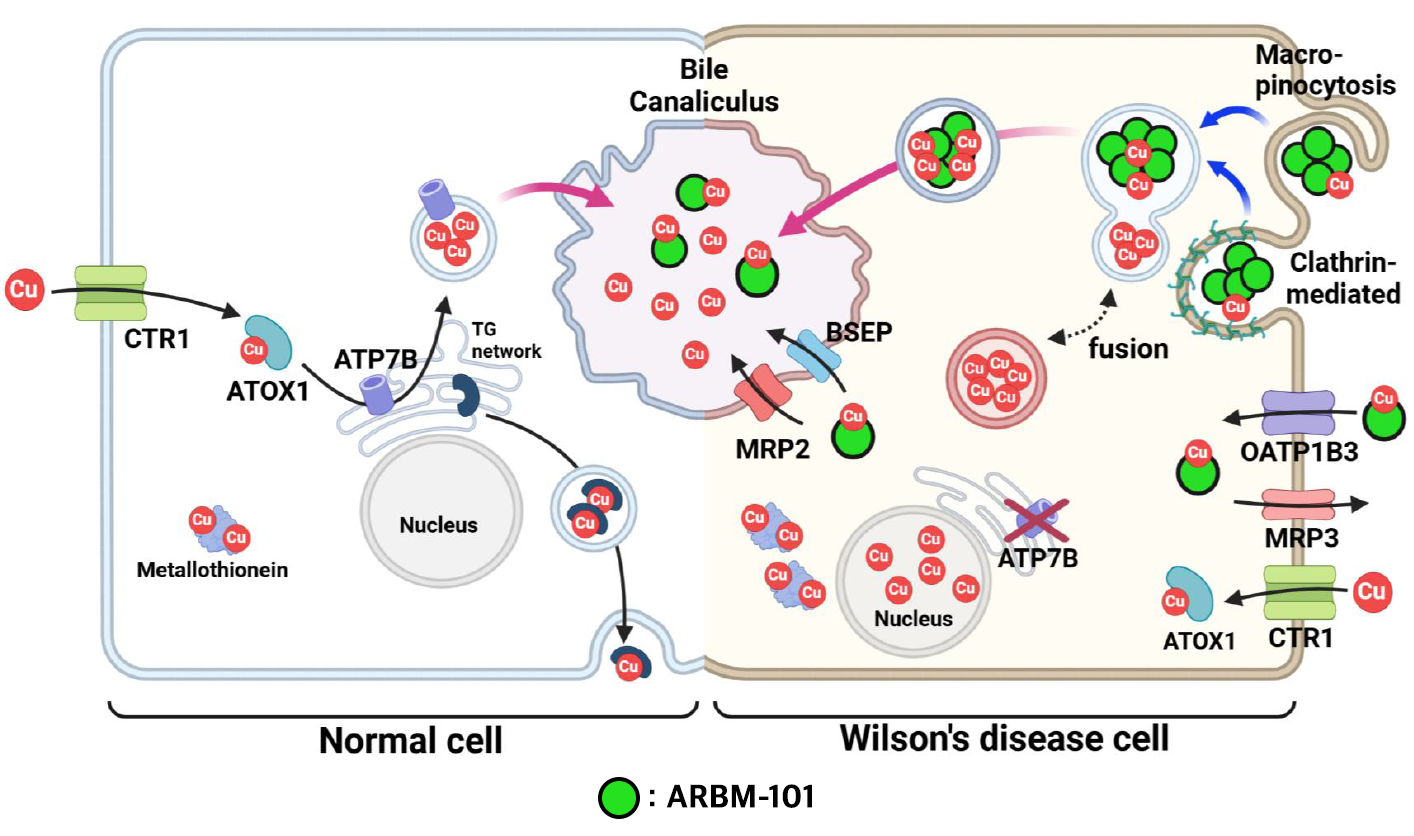
ARBM-101 is a copper-binding peptide that captures excess hepatic copper. Hepatic uptake occurs through both transporter-mediated and vesicle-mediated pathways, followed by biliary-fecal excretion of the ARBM-101–copper complex.
Proof of concept
In rodent models of Wilson's disease, ARBM-101 reduced hepatic copper, increased fecal copper excretion with limited urinary excretion, and improved survival and liver function, with benefits sustained even after treatment discontinuation.
Global partnership
In December 2025, Arbormed licensed European rights for ARBM-101 to Hyloris Therapeutics following technical and commercial diligence — providing external validation of the program's science and business case.
Scientific overview & preclinical evidence
Mechanism of copper removal, biodistribution and efficacy data from preclinical models of Wilson's disease.
ARBM-101 Mechanism of Action
LPP rats
2023 Gastroenterology
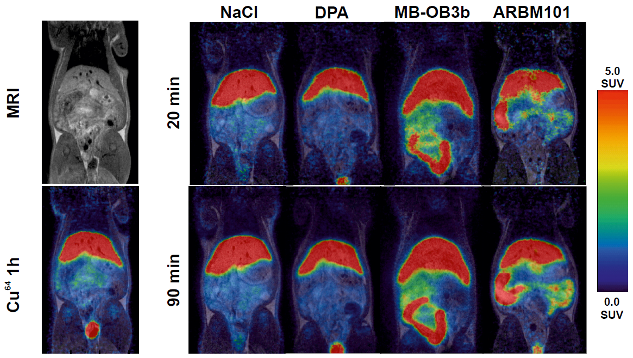
ARBM-101 Preclinical Evidence
Copper removal
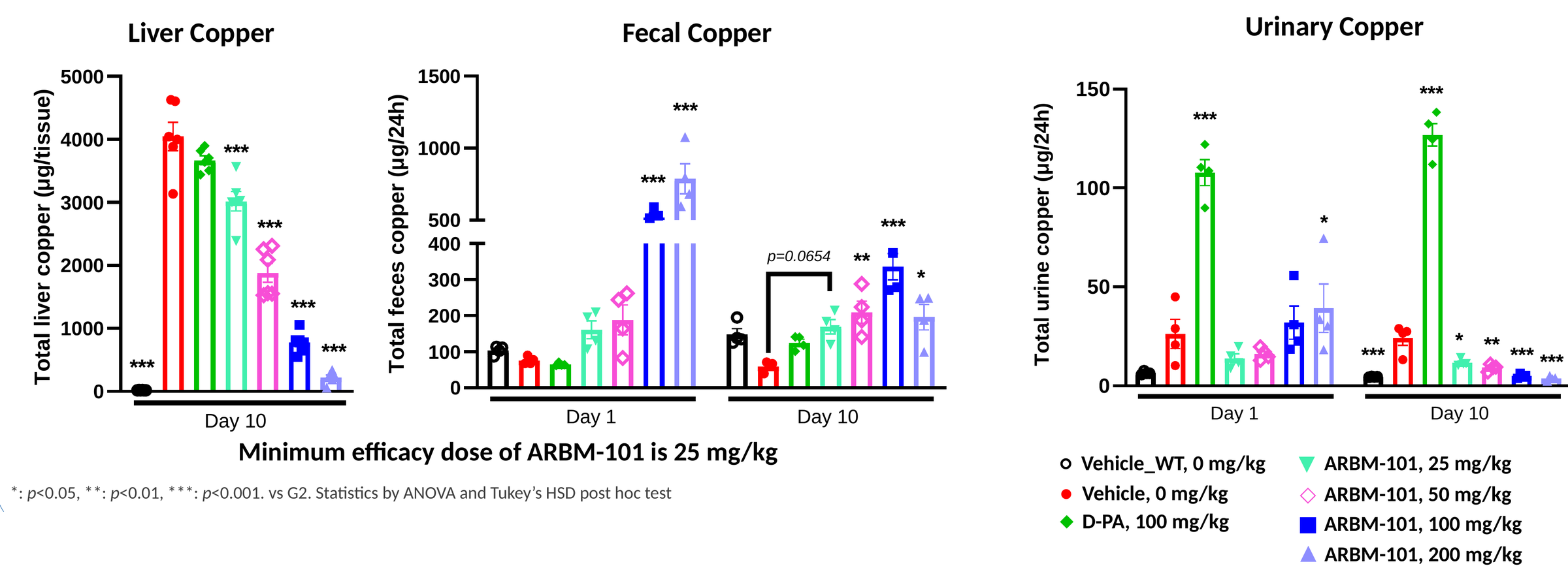
LPP rat (Wilson's disease model) · 9-day repeated IV dosing, 25–200 mg/kg vs. vehicle and D-penicillamine
ARBM-101 reduced liver copper in a dose-dependent manner, with copper excreted predominantly via feces rather than urine. Minimum efficacious dose: 25 mg/kg.
Liver function
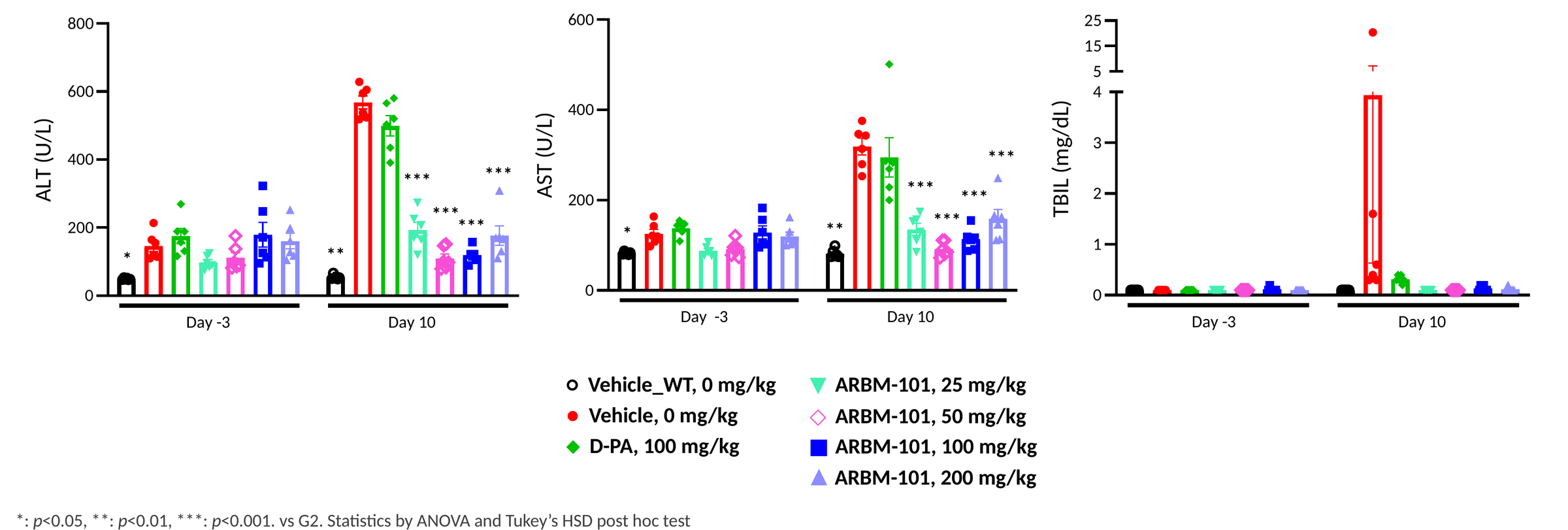
LPP rat · Serum ALT, AST and total bilirubin before (Day −3) and after (Day 10) treatment
All ARBM-101 dose groups showed significantly lower ALT and AST than vehicle at Day 10, and bilirubin elevation seen in untreated animals was not observed.
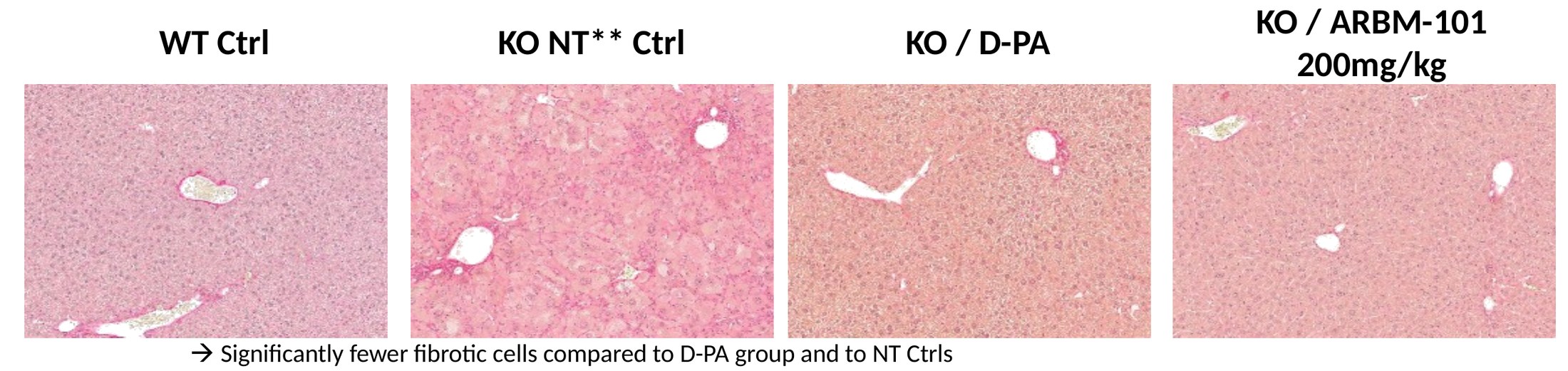
Protection from liver fibrosis
Atp7b−/− mouse · 2-week intensive dosing followed by six bi-weekly doses
Liver copper decreased dose-dependently, liver function tests returned to normal, and fibrosis progression was prevented — with significantly fewer fibrotic cells than both untreated and D-penicillamine groups.
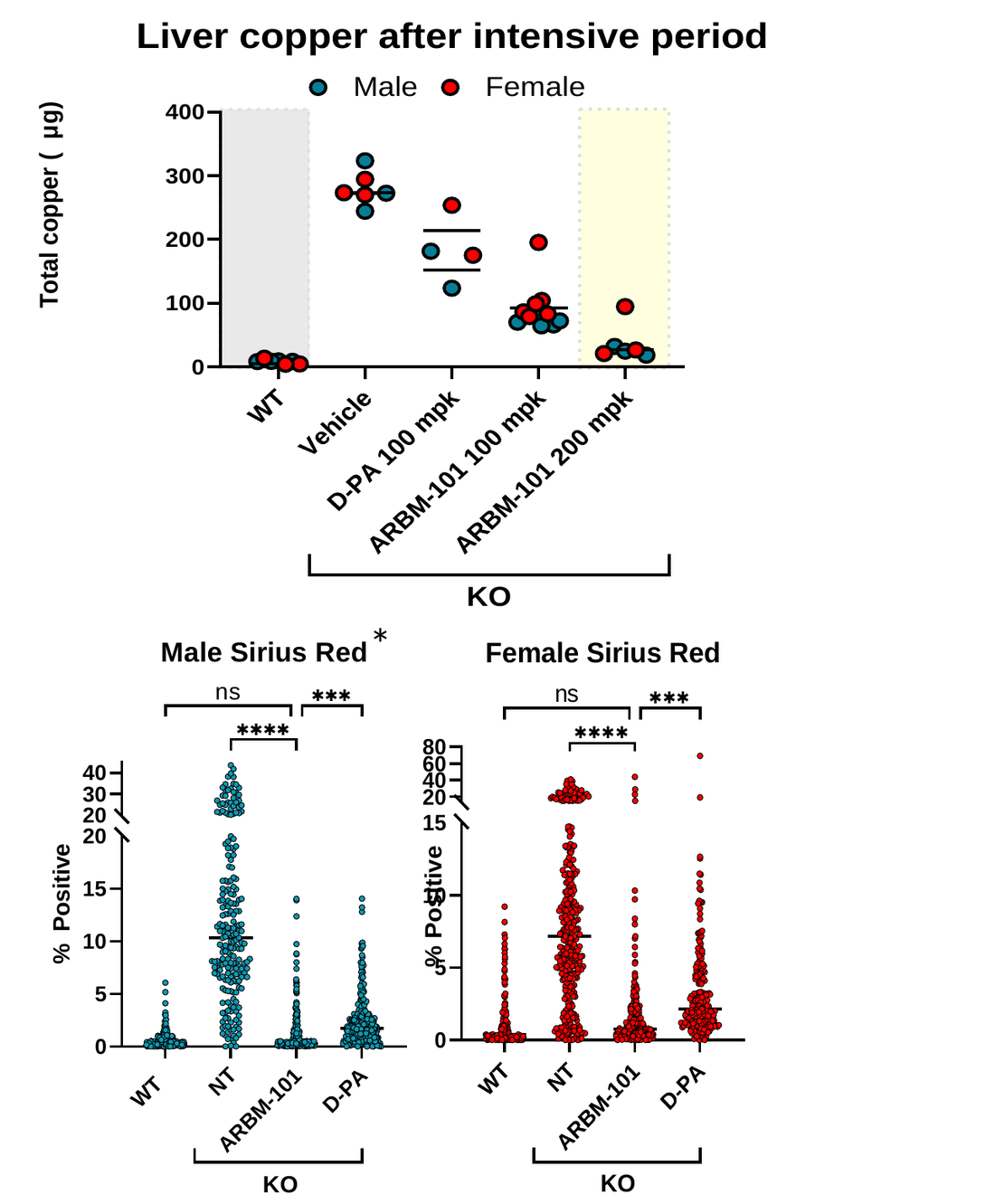
*p<0.05, **p<0.01, ***p<0.001 (LPP rat: vs. vehicle, ANOVA with Tukey's HSD). Figures are reproduced from the original study reports without modification of data.