Novel therapies for rare and underserved disease
Four innovative programs spanning IND-cleared, preclinical, and discovery-stage development.
Pendred syndrome
Pendred syndrome is a genetic disorder associated with congenital hearing loss and SLC26A4 mutations. ARBM-301 is an early-stage small-molecule corrector designed to improve trafficking and cell-surface expression of mutant pendrin in inner-ear epithelial cells.
Mechanism of action
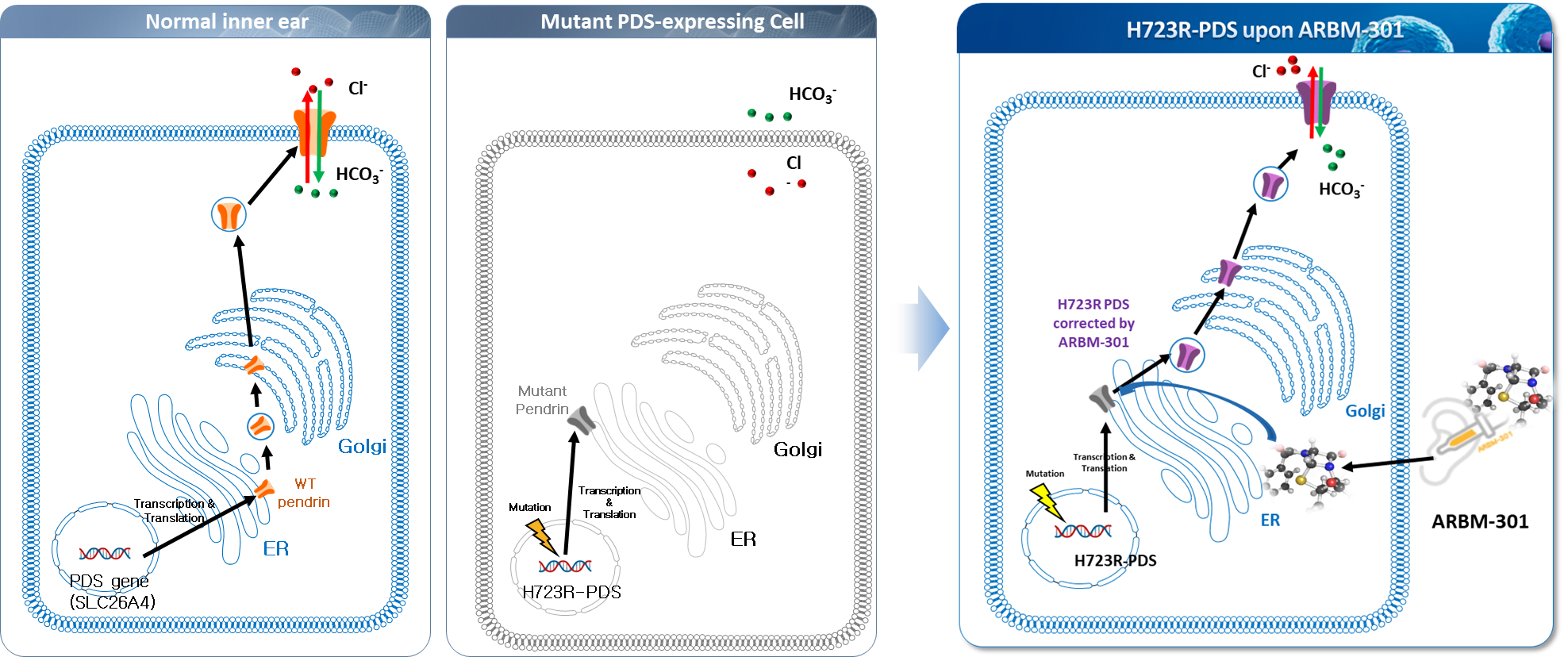
ARBM-301 is designed as a pharmacological chaperone (corrector) for H723R mutant pendrin. The misfolded mutant protein is retained in the endoplasmic reticulum; ARBM-301 is designed to promote its correct folding so that pendrin can traffic through the Golgi to the plasma membrane and resume anion exchange.
Proof of concept
In H723R pendrin-expressing cells, ARBM-301 restored cell-surface localization of mutant pendrin and recovered Cl⁻/HCO₃⁻ exchange in a dose-dependent manner. Cell-surface pendrin also increased in primary epithelial cells from a Pendred syndrome patient.
Next step
In vivo studies in a dox-inducible H723R transgenic mouse model are ongoing to support preclinical candidate selection. No clinical efficacy has been established.
Scientific overview & preclinical evidence
Mechanism of pendrin correction and in vitro evidence in H723R mutant and patient-derived cells. No clinical efficacy has been established.
ARBM-301 Mechanism of Action
ARBM-301 Preclinical Evidence
Correction of mutant pendrin trafficking
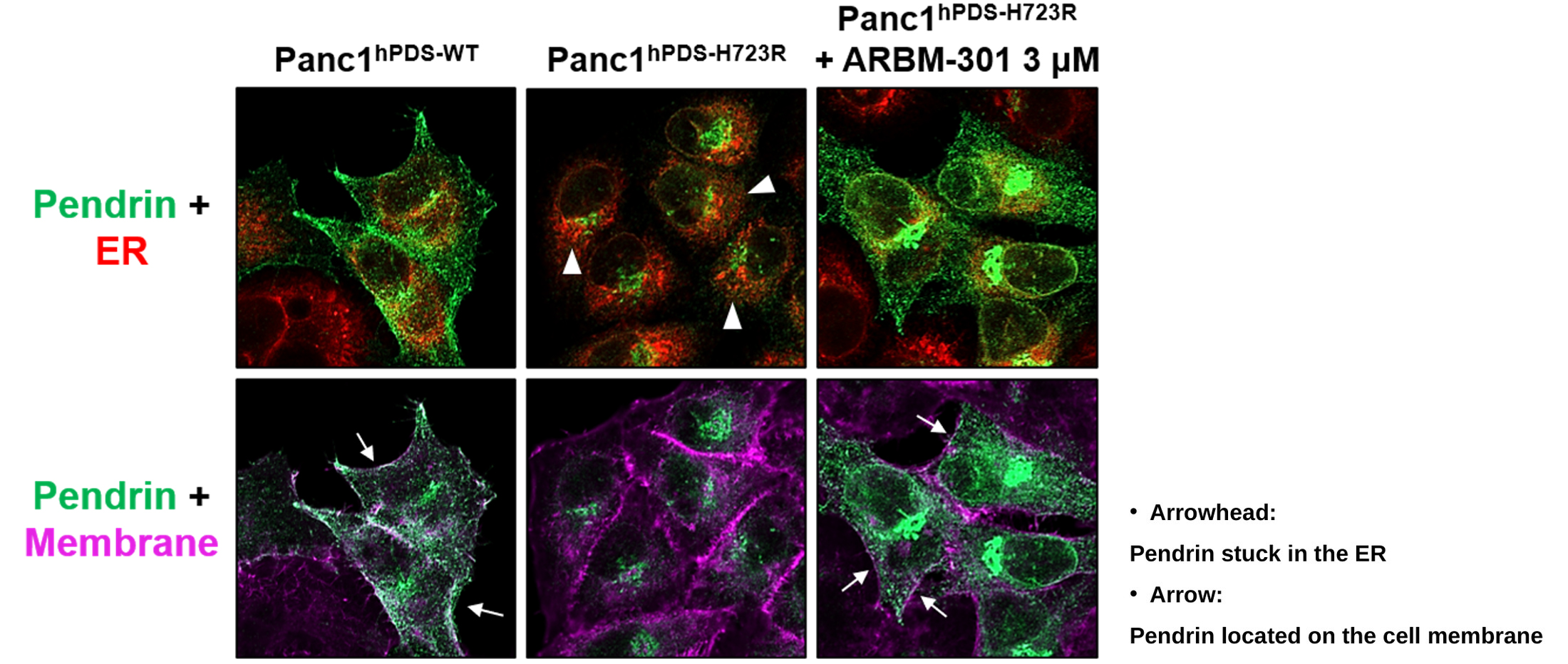
Panc1 cells expressing human WT or H723R pendrin · ARBM-301 3 µM · Immunocytochemistry
H723R mutant pendrin, retained in the ER, was restored localization on the cell surface (membrane) by ARBM-301 — a distribution similar to wild-type pendrin.
Restoration of anion exchange function
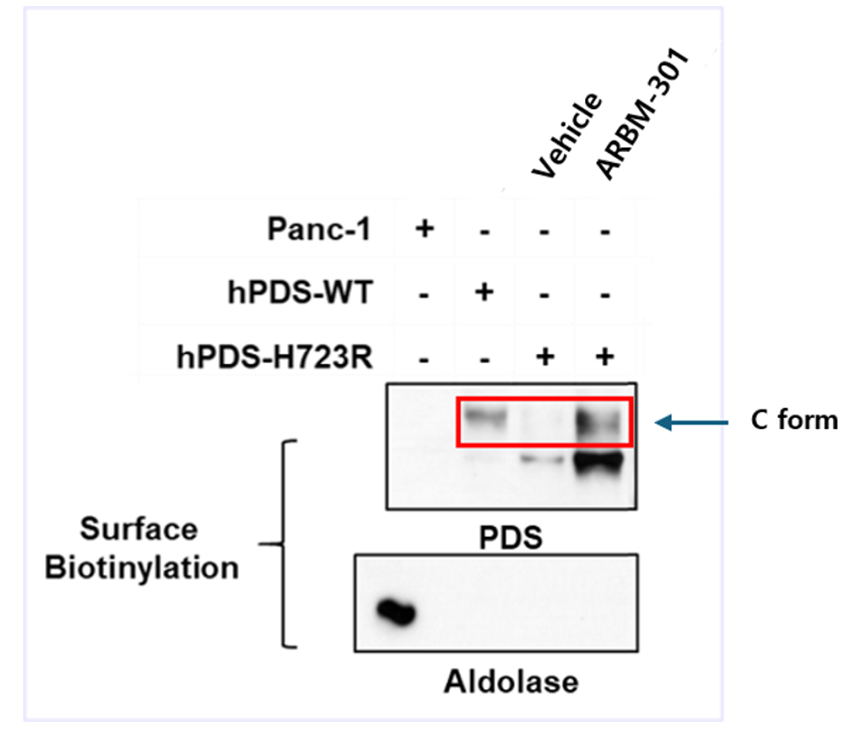
H723R pendrin-expressing cells · Western blotting (surface biotinylation) and anion (Cl⁻/HCO₃⁻) exchange assay
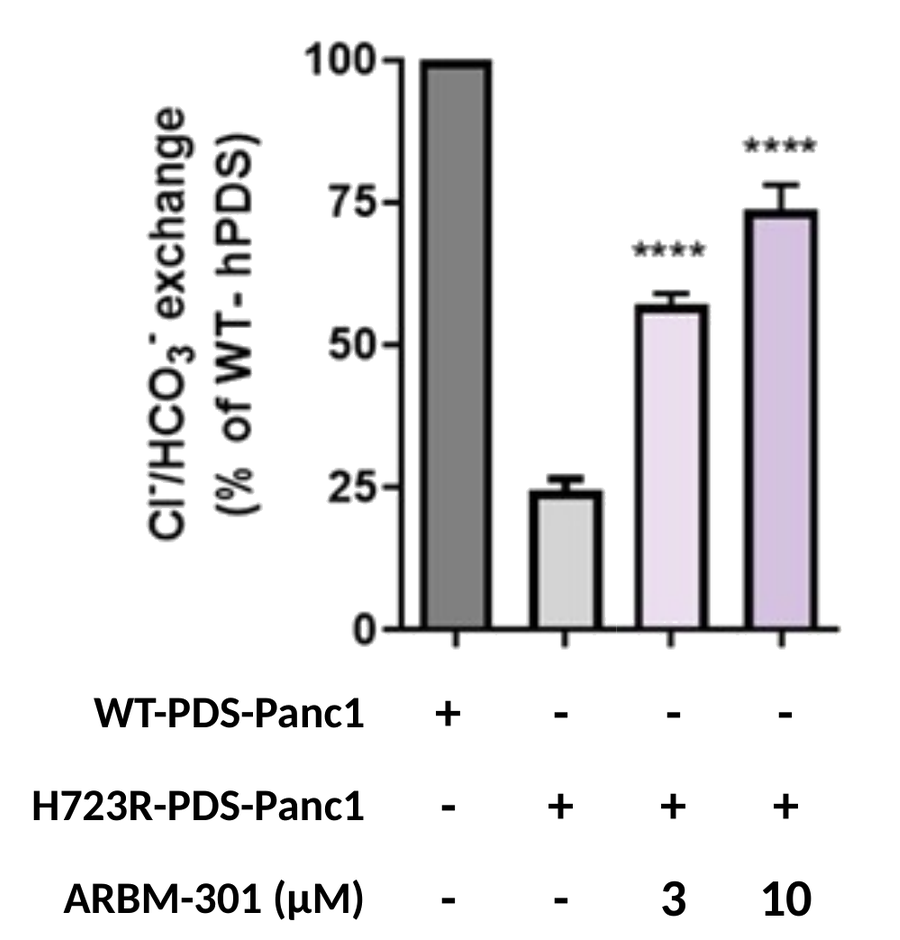
Western blots showed restored cell surface expression of mature pendrin (C form) with ARBM-301, and Cl⁻/HCO₃⁻ exchange was significantly recovered at 3 and 10 µM.
- WB: Western blotting (WB)
- pH: Anion (Cl⁻/HCO₃⁻) exchange assay